
AI-powered content creation and personalization refers to the use of artificial intelligence to generate, optimize, and tailor content based on audience behavior, preferences, and intent. Unlike traditional marketing approaches that rely on one-size-fits-all messaging, AI helps businesses deliver the right content to the right audience at the right time.
This shift matters more than ever today. Consumer behavior has changed drastically—people expect immediate, personalized answers across channels. At the same time, AI-driven search engines and answer engines (like Google’s SGE and ChatGPT-powered responses) are shaping how users discover and trust information. To stay visible, brands must create content that is not only SEO-friendly but also optimized for answer engines (AEO), generative engines (GEO), and human engagement (HEO).
Yet, most businesses face persistent challenges:
- Publishing generic content that fails to stand out in a crowded digital space.
- Experiencing low engagement rates because content isn’t personalized.
- Struggling with wasted marketing spend on campaigns that don’t convert.
- Dealing with poor conversion rates when visitors don’t see value or relevance.
AI-powered content creation and personalization directly addresses these pain points by combining data-driven insights with scalable automation, helping businesses boost visibility, engagement, and conversions.
Table of Contents
The Evolution of Content Marketing in the Age of AI
Not long ago, digital marketing was dominated by keyword stuffing and volume-driven content strategies. The focus was on producing as many articles or landing pages as possible, with little attention to user experience or intent. While this approach helped secure rankings in the early days of search engines, it often failed to deliver real value to audiences—leading to high bounce rates, low trust, and weak conversions.
Today, the landscape has shifted dramatically. Search engines have evolved to reward intent-driven content that answers real user questions in a clear, relevant, and trustworthy way. Instead of just inserting keywords, successful marketers now design content strategies around search intent, conversational queries, and solution-focused storytelling.
Fueling this transformation is the rise of AI-powered tools like ChatGPT, Jasper, Copy.ai, and HubSpot AI. These platforms help businesses research topics, generate drafts, analyze audience behavior, and personalize messaging at scale. AI is no longer just about saving time—it’s about enhancing creativity, improving accuracy, and making content more relevant to both users and search engines.
The real power lies in the combination of AI and personalization. AI helps uncover what people are searching for, while personalization ensures that the message resonates with their unique needs, preferences, and stage in the buyer’s journey. Together, they bridge the gap between user intent and search engine expectations, ensuring that content is not only discoverable but also engaging and conversion-friendly.
Pain Points That AI-Powered Content Solves
Businesses today face more competition than ever, and traditional content strategies often fall short. AI-powered content creation and personalization directly address the biggest challenges marketers face, ensuring that content not only gets discovered but also engages and converts.
3.1. Content Overload & Low Engagement
Problem: The digital space is flooded with generic blogs, ads, and emails. Audiences are overwhelmed, leading to content fatigue and declining engagement.
Solution: AI-driven insights identify niche topics and trending conversations that resonate with your audience. By segmenting users based on demographics, behavior, and preferences, marketers can personalize messaging—making content relevant and harder to ignore.
3.2. Low Organic Traffic & Poor Visibility
Problem: With constant algorithm updates and rising competition, ranking for valuable keywords has become a challenge. Even high-quality content can remain invisible without the right optimization.
Solution: AI simplifies keyword clustering and search intent mapping, ensuring content aligns with how users actually search. Optimizing for Answer Engine Optimization (AEO) and Generative Engine Optimization (GEO) helps content surface in featured snippets and AI-driven search results—boosting visibility and authority.
3.3. High Bounce Rates & Poor Conversions
Problem: Visitors leave quickly when they feel the content doesn’t match their needs, resulting in high bounce rates and missed conversion opportunities.
Solution: AI enables dynamic, personalized landing pages that adapt to user behavior. With AI-powered product recommendations and behavior-driven CTAs, businesses can deliver a tailored experience that keeps users engaged and increases the likelihood of conversion.
3.4. Wasted Marketing Budget
Problem: Businesses often waste time and money creating content that doesn’t align with the customer journey. This leads to poor ROI and inefficient campaigns.
Solution: Through predictive analytics and AI-driven content funnels, marketers can anticipate customer needs at each stage of the journey. Combined with Conversion Experience Optimization (CEO) strategies, this ensures that every piece of content works harder—reducing waste and maximizing returns.
AI-Powered Content Creation: How It Works
AI-powered content creation combines data, automation, and machine learning to make content more relevant, scalable, and effective. Instead of spending weeks brainstorming ideas or drafting campaigns, businesses can now use AI to streamline the entire process—while still maintaining creativity and brand authenticity.
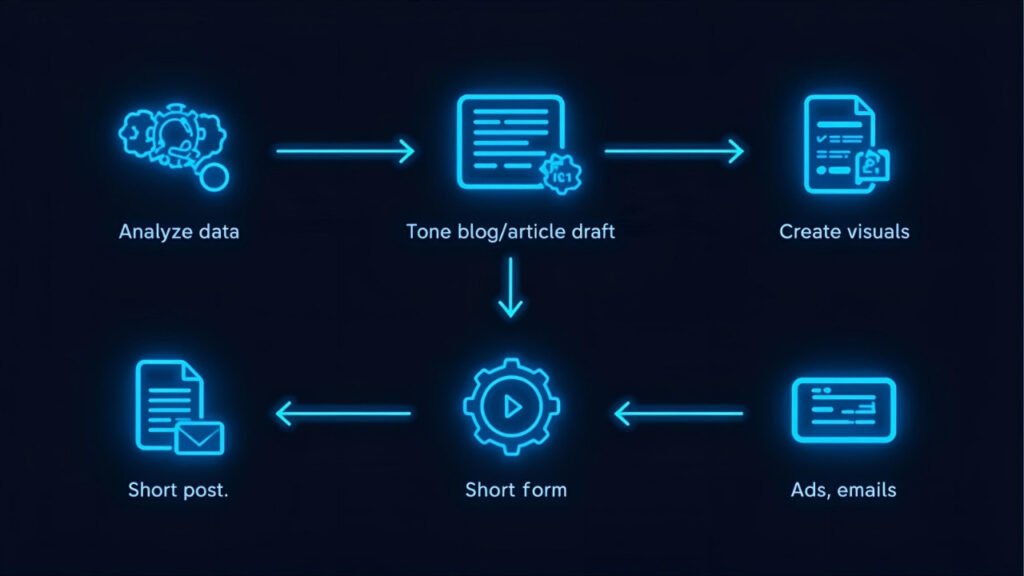
1. Natural Language Processing (NLP) for Topic Ideation
AI tools use Natural Language Processing (NLP) to analyze search trends, customer queries, and competitor strategies. This helps identify high-value topics and intent-driven questions that users are actively asking. By aligning content with these insights, businesses can increase visibility across traditional search engines and AI-driven answer engines.
2. Automated Draft Creation
AI platforms like ChatGPT, Jasper, or Copy.ai can generate first drafts of blogs, ad copy, product descriptions, and even email campaigns within minutes. This doesn’t replace human creativity, but it removes the repetitive work and accelerates content production. With AIO-friendly optimization, these drafts can be fine-tuned for tone, accuracy, and personalization.
3. AI for Visual Content
Beyond text, AI can generate images, videos, and infographics that support storytelling. From social media posts to product visuals, AI ensures that content is not only informative but also visually engaging. This combination of text + visuals enhances HEO (human experience optimization) and keeps users on-page longer, reducing bounce rates.
4. Content Repurposing at Scale
One of the biggest strengths of AI is the ability to repurpose content across formats. For example, a long-form blog can be broken into short-form LinkedIn posts, email snippets, or TikTok scripts. This maximizes reach while saving time and cost—ensuring that every piece of content drives traffic, engagement, and conversions.
By combining NLP insights, automation, and repurposing capabilities, AI-powered content creation not only saves resources but also makes content search engine optimized (SEO), answer engine ready (AEO/GEO), and conversion-focused (CEO).
Personalization: Taking Content to the Next Level
Content creation alone isn’t enough in today’s competitive landscape. To truly stand out, brands must move beyond generic messaging and embrace AI-powered personalization. Personalization ensures that every visitor, subscriber, or customer experiences content that speaks directly to their needs, stage in the journey, and intent. This not only improves engagement (HEO) but also strengthens visibility in AI-driven search (AEO/GEO) and drives higher conversions (CEO).
5.1. First-Party & Zero-Party Data in Content Strategy
In a privacy-first world, third-party cookies are disappearing, and consumers are more cautious about how their data is used. Businesses must pivot to:
- First-party data: Insights collected directly from customer interactions (website visits, purchase history, app behavior).
- Zero-party data: Information customers willingly share, such as preferences, feedback, or survey responses.
When used responsibly, this data allows brands to create trustworthy and personalized experiences without violating privacy regulations—building long-term loyalty.
5.2. Dynamic Content & Hyper-Personalized Journeys
Personalization goes far beyond inserting a customer’s name in an email. With AI, marketers can deliver dynamic, adaptive content that changes in real-time:
- Website personalization: AI-driven product recommendations, personalized banners, or adaptive landing pages tailored to visitor intent.
- Email & ad personalization: Campaigns triggered by user behavior—like cart abandonment emails, retargeting ads, or content offers aligned with browsing history.
This hyper-personalized approach ensures users see what’s most relevant to them, reducing friction and boosting conversion rates.
5.3. Predictive Personalization with AI
The next level of personalization is predictive intelligence. Instead of reacting to customer behavior, AI anticipates needs before users even express them. Examples include:
- Offering recommendations based on similar customer journeys.
- Delivering proactive solutions to prevent churn.
- Creating retention campaigns that address needs at the right time.
By predicting intent, AI helps businesses reduce customer churn, increase retention, and maximize lifetime value—a core part of conversion experience optimization (CEO).
When personalization is powered by AI, content becomes more than information—it becomes an experience. This synergy of data, automation, and human creativity ensures brands stay competitive in both search engines and customer hearts.
Optimizing for Search Engines & AI Engines (SEO, AEO, GEO)
The way people discover content is evolving. Traditional search engines remain critical, but AI-driven engines—from Google’s Search Generative Experience (SGE) to tools like ChatGPT—are now shaping visibility and trust. To succeed, businesses must optimize content not just for ranking, but also for being selected, cited, and trusted across multiple discovery channels.
SEO: Keyword Intent, Structured Content & Semantic Search
Classic SEO is no longer about keyword stuffing—it’s about understanding user intent. This requires:
- Mapping content to search intent (informational, navigational, transactional).
- Using structured content (headings, schema markup, internal linking).
- Aligning with semantic search so content answers related queries naturally.
Well-optimized SEO ensures discoverability in traditional search engines.
AEO: Answer Engine Optimization
With more users turning to AI assistants and conversational search, content must be structured for direct answers. This includes:
- Formatting content as Q&A and FAQs.
- Adding FAQ schema to signal relevance to search engines.
- Writing concise answer snippets that AI engines can cite with authority.
AEO ensures your content is not only seen but also trusted as a direct solution.
GEO: Generative Engine Optimization
Generative engines like ChatGPT or Gemini pull from authoritative sources to create responses. To appear in these answers, content must be:
- Fact-based and accurate, with verifiable claims.
- Trustworthy and up to date, using expert insights and reliable data.
- Source-rich, including outbound links, citations, and structured references.
GEO ensures your brand’s content is cited by AI-driven responses—expanding reach beyond traditional SERPs.
HEO: Human Experience Optimization
Even with AI engines rising, content must still connect with people. This means:
- Readability: clear, jargon-free language.
- Scannable formatting: bullet points, short paragraphs, headings.
- Empathy-driven writing: addressing pain points, motivations, and emotions.
HEO ensures users stay engaged, lowering bounce rates and building trust.
CEO: Conversion Experience Optimization
Traffic and visibility mean little without conversions. CEO ensures content drives action through:
- Strategic CTAs that guide users toward the next step.
- Lead magnets like free guides, demos, or checklists.
- Conversion-focused copy that speaks to benefits, urgency, and trust signals.
CEO transforms visibility into measurable ROI.
By integrating SEO, AEO, GEO, HEO, and CEO, businesses create content that ranks higher, gets cited in AI answers, engages users, and ultimately drives conversions.
Tools & Platforms for AI-Powered Content & Personalization
Adopting the right tools is essential to unlock the full potential of AI-powered content and personalization. The right mix of platforms helps marketers generate high-quality content, deliver tailored experiences, and track performance for continuous optimization.
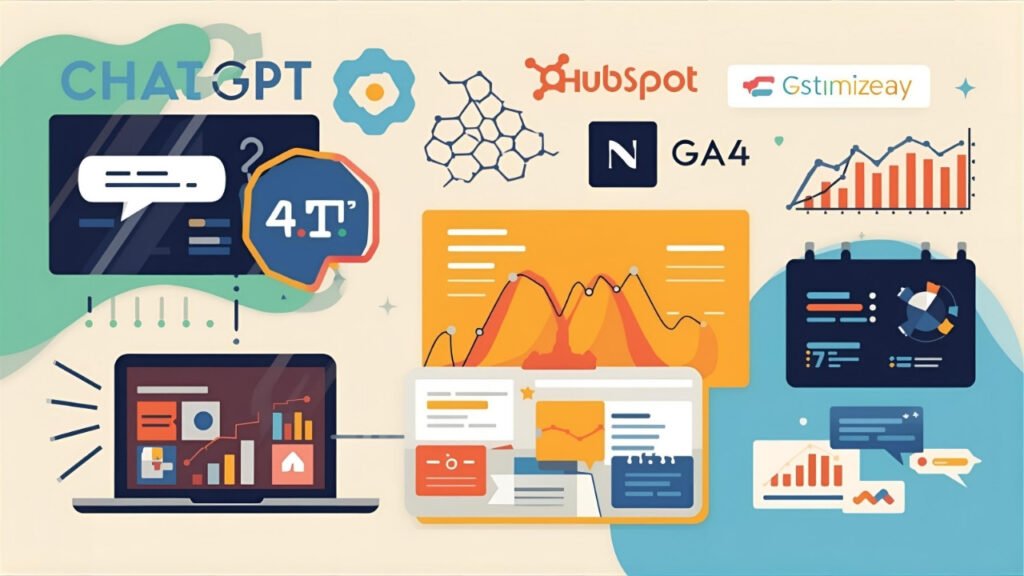
1. AI Content Tools
Creating relevant and engaging content at scale is easier with AI-powered writing assistants. Popular tools include:
- ChatGPT – for conversational copy, ideation, and generative answers.
- Jasper – for long-form content, ad copy, and brand-consistent messaging.
- Writesonic – for fast content creation across multiple formats (blogs, social, ads).
These tools leverage NLP (Natural Language Processing) and machine learning to produce SEO-ready drafts, streamline ideation, and support AIO-friendly workflows.
2. Personalization Tools
To improve engagement and conversions, personalization platforms allow businesses to deliver dynamic, adaptive experiences. Leading solutions include:
- Optimizely – for A/B testing, multivariate testing, and personalized experiences.
- Segment – for collecting and unifying customer data across touchpoints.
- HubSpot – for marketing automation, CRM integration, and personalized campaigns.
These tools ensure HEO and CEO alignment by making every interaction more relevant to the customer journey.
3. Analytics & Tracking Platforms
Data-driven insights are the backbone of effective personalization. Modern analytics tools provide real-time tracking of behavior, intent, and conversion paths:
- Google Analytics 4 (GA4) – for tracking multi-channel performance and user journeys.
- Heatmaps (e.g., Hotjar, Crazy Egg) – for visual insights into user interactions and friction points.
- AI-driven CRMs (like Salesforce Einstein, Zoho AI, HubSpot AI) – for predictive analytics, lead scoring, and retention strategies.
By combining analytics with AI, marketers can fine-tune their strategies, optimize content for SEO/AEO/GEO, and maximize conversions through CEO-friendly decisions.
When these tools are integrated into a single workflow—AI creation + personalization engine + analytics feedback loop—businesses can deliver scalable, relevant, and conversion-focused experiences that outperform traditional approaches.
Action Plan: How to Get Started Today
AI-powered content creation and personalization may feel complex, but getting started doesn’t have to be overwhelming. By following a structured roadmap, businesses can implement AI step by step, minimize risks, and start seeing measurable results quickly.
Step 1: Audit Current Content and Personalization Gaps
Begin with a content audit to evaluate what’s working and what’s not. Identify:
- Pages with high bounce rates or poor engagement.
- Content that ranks but doesn’t convert.
- Gaps where personalization is missing (generic emails, static landing pages).
This establishes a baseline for improvement while ensuring your strategy aligns with SEO, AEO, and GEO requirements.
Step 2: Pick AI Tools Aligned with Business Needs
Choose the right AI-powered tools for your goals:
- Content creation (ChatGPT, Jasper, Writesonic).
- Personalization (Optimizely, Segment, HubSpot).
- Analytics (GA4, heatmaps, AI-driven CRMs).
The right stack ensures scalability, accurate targeting, and CEO-friendly outcomes like higher conversions and ROI.
Step 3: Start with One Channel
Rather than overhauling everything at once, focus on one high-impact channel:
- Email campaigns for personalized outreach.
- Blog posts for organic visibility.
- Paid ads for faster conversions.
This allows teams to experiment, refine, and build confidence before expanding.
Step 4: Test, Measure, and Optimize with AI Insights
AI doesn’t just create content—it also learns from user interactions. Use analytics and predictive insights to:
- Track engagement (clicks, time on page, conversion rates).
- Test variations (A/B or multivariate).
- Continuously refine personalization strategies.
This feedback loop ensures that your content becomes smarter over time, meeting both search engine expectations and human experience needs.
By taking these steps, businesses can quickly move from experimentation to impact—building content that ranks higher, engages deeply, and converts consistently.
Conclusion
The future of marketing is not one-dimensional—it’s the powerful combination of AI, personalization, and human creativity. AI brings scale, speed, and precision, while human marketers add empathy, storytelling, and strategic vision. Together, they create content that connects, converts, and sustains long-term growth.
It’s important to remember that AI isn’t here to replace people—it’s here to amplify results. By automating repetitive tasks, analyzing massive datasets, and predicting user intent, AI frees up human marketers to focus on higher-value creativity and strategy.
Now is the best time to take action. Don’t wait for competitors to outpace you—start small. Implement one AI-driven personalization tactic this week, whether it’s dynamic email campaigns, adaptive landing pages, or predictive recommendations. Even a single step can transform engagement, boost conversions, and future-proof your marketing strategy.
The brands that win tomorrow will be the ones that embrace AI today—while keeping the human touch at the center of every interaction.
Frequently Asked Questions
1. What is AI-powered content creation?
AI-powered content creation uses artificial intelligence tools like ChatGPT, Jasper, or Writesonic to generate, optimize, and personalize content. It goes beyond automation by analyzing user intent, behavior, and data to produce content that ranks higher, engages better, and converts faster.
2. How does AI improve personalization in marketing?
AI leverages first-party and zero-party data, behavioral insights, and predictive analytics to deliver dynamic content and hyper-personalized experiences. From personalized landing pages to AI-powered recommendations, it ensures every interaction feels relevant and valuable to the user.
3. Will AI replace human content creators?
No. AI is designed to support and amplify human creativity, not replace it. While AI handles repetitive tasks like ideation, optimization, and personalization at scale, humans provide strategy, emotional intelligence, and storytelling that machines can’t replicate.
4. How does AI help with SEO and search visibility?
AI assists with keyword clustering, semantic search alignment, and intent mapping, making content more discoverable. It also optimizes for Answer Engine Optimization (AEO) and Generative Engine Optimization (GEO)—ensuring content is cited in AI-driven search results and appears in featured snippets, FAQs, and summaries.
5. What is the first step to using AI in my content strategy?
Start with a content and personalization audit to identify gaps. Then, choose one AI tool and one marketing channel (blog, email, or ads) to experiment with. Gradually expand by testing, measuring, and optimizing with AI insights to build momentum without overwhelming your team.
Don’t wait until 2026 to play catch-up. Implement one of these money-making strategies now and stay ahead of the curve.